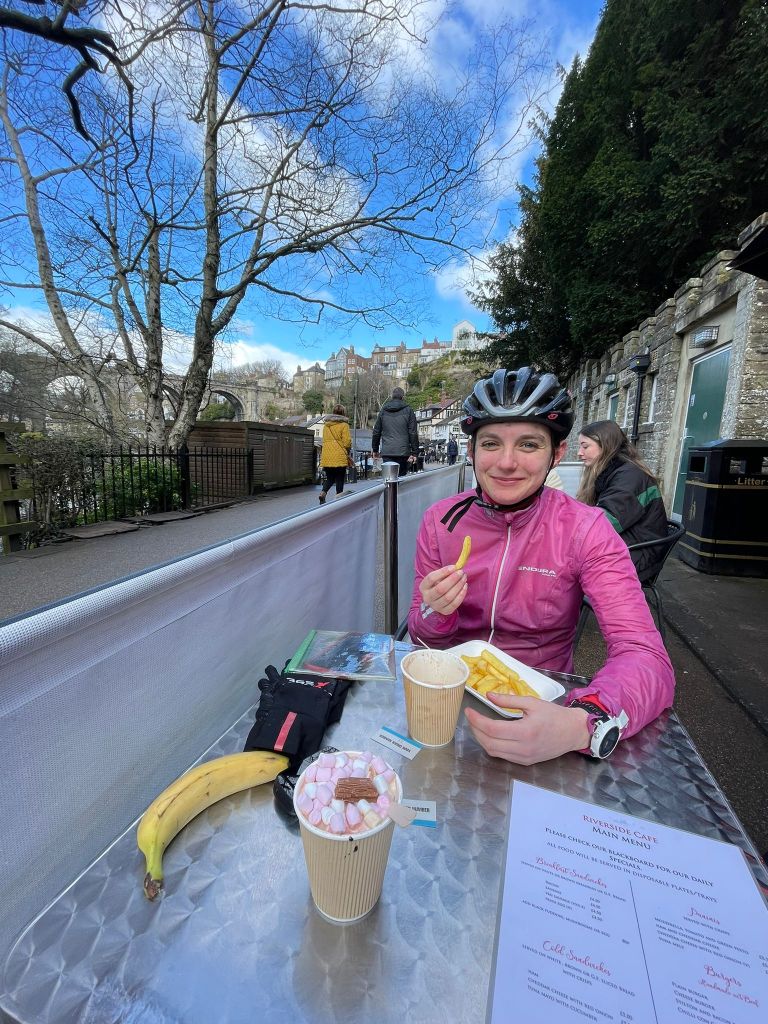
If you’re like me, a budding triathlete with big goals, then the thought of an off season could seem a little daunting: what if I lose all my fitness or I forget how to swim?! However, an off season is an essential part of any athlete’s year. Age groupers and elite athletes alike. A few weeks away from your normal training routine can aid recovery and restore your vital energy stores. As well as give your mind a break from juggling three sports and whatever else is going on in your life. So, what should your off season look like? How long should it be? How do you stay sane? Here are a few things I’ve learnt.
What is an off season ?
An off season is a period of time away from an athlete’s main competitive season, where regular, structured and planned training is reduced or stopped completely to allow time for the body to recover. For triathletes, this generally falls somewhere between the months of September and October. It’s recommended that you have at least two weeks off. Although, it’s not uncommon for athletes to take up to a month off.
The amount of time you take off will depend greatly on how you are feeling physically and mentally. For example, if you’re feeling completely wiped out from the season, carrying lots of mental and physical fatigue, and are thinking about giving up on triathlon and taking up a different sport, then you would most definitely benefit from having four weeks away. Yet, if you just want to allow a bit of time to reset the body and mind, but still feel motivated and excited for the following year, then two weeks should do fine.
What should an off season look like?
It will most definitely start with a few rest days (or at least one), where you don’t engage in any training. Although, light activities such as walking would be ok. Then, instead of trying to stick to a set power, pace, or specific weight during a session, your training becomes a lot freer. You have the freedom to choose when you want to train and for how long.
Strangely, this can be a little overwhelming in itself (at least it was for me), particularly when you are so used to structure and routine in training. So, as a guide, here are several ways to approach an off season if you struggle with the concept of ‘just train when you feel like it’.
- Replace your usual ‘hard’ session with an easy ride, run, swim or even a walk
- Use lighter weights in the gym or just do body weight exercises
- Reduce the volume of your usual session, but keep some intensity e.g. instead of 6 X 200s fs on 3.00 mins, do 6 X 100s fs on 1.30 mins
- Reduce the number of times you do an activity per week e.g. three swim sessions instead of five
- Reduce the duration of your session e.g. replace a three hour ride with a two hour ride
- Ride to a new destination or add a nice café stop
- Try a new Parkrun but remember it’s not a race (at least until ‘off season’ has ended)
Hopefully, some of these idea will help you structure what is meant to be unstructured training, whilst still giving you that all important rest and recovery time. That’s the training sorted, now how else can you make the most of off season?
How to keep busy during off season?
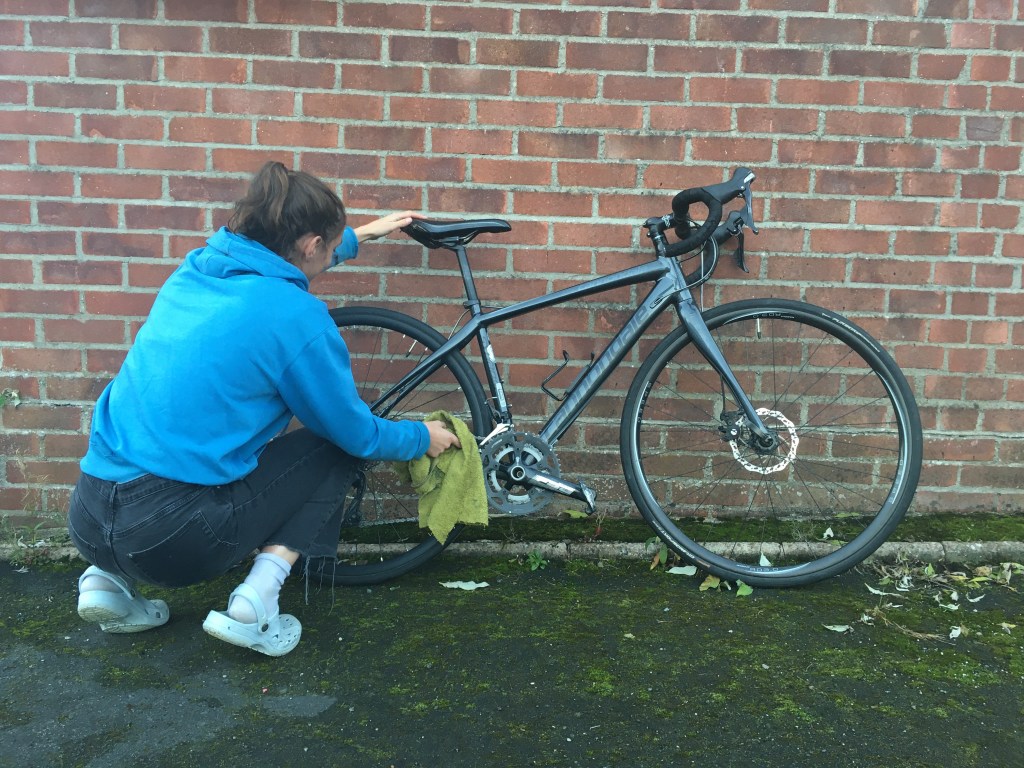
Clean and service your bikes:
The first thing I like to do, is sort out my bikes and accessories. I book a bike service for my race bike, as well as give it a deep clean. This includes all the parts that are often neglected, such as the cassette and seat post. I then put my race bike to bed until spring and drag my winter bike out the garage, ready for the winter grind.
Stock up on winter training gear:
Get your winter training gear out the cupboard and check it’s in good working order/ you have enough to last. If your running low it’s worth stocking up, particularly on gloves, overshoes, rain jackets, bright bike lights (~1,000 lumens), and of course mudguards. Then pack away your summer kit and store it out of sight, so that you haven’t got a cluttered space.
Reflect on the season:
Finding a time to sit down and reflect on your season would be very useful, so you can think about what worked, and what didn’t work. This covers all aspects of training and racing. For example, was I pleased with my performances? Did my weekly training schedule work? Did I enter too many races, or not enough?
If something didn’t work, why didn’t it work? Be honest with yourself and write down your reflections, so that you can refer back to them when planning future training. But remember to also mention the positives.
Plan Ahead:
Once you’ve established what worked and what didn’t work, it could be a good idea to look ahead to the following year. What do you want to achieve? What needs to be in place for this to happen? A coach? A financial plan? A training partner? Use your reflections from this season to help you come up with a solid plan and if you don’t know straight away, take your time.
Socialise & relax:
Once a year a triathlete has time for socialising – better make the most of it! Go for a coffee with a friend, watch the sunset instead of going to bed early, or do some baking. You now have a bit of extra time, so whatever you want to do make it happen. 🙂